World coins chat: Argentina

10 publicações

» Acesso rápido à última publicação

Argentina was part of the much bigger Viceroyalty of the Rio Plata, that also contained (parts of) Bolivia, Paraguay and Uruguay. Independence was proclaimed in 1810 as the United Provinces of Rio Plata (or River Plate). For decades, confederalists and unionists fought each other over disagreements on centralisation. In the 1831 the country was renamed to the Argentine Confederation and from 1853 it is known as the Republic of Argentina. Even after that not all regions wished to be part of Argentina and struggled for autonomy. This is why many provinces issued their own coinage next to the coinage issued by Argentina proper.

Argentina received a lot of immigrants from Europe in the late 19th century, most notably from Italy. The economy prospered and by 1900 it was one of the richest countries in the world. After 1930 things got worse and the country slid into political instability and economic decline. It was either ruled by dictators or leftists that pursued social reform but with gross overexpenditure, causing an era of chronic inflation up to hyperinflation. Democracy was restored a year after the lost Falklands War in 1983, but economic policy still resembles a bit to what happened before. In 2003 Argentina defaulted on its debt and turned USD saving deposits of Argentinians into Peso (meaning a 70% decline in value) leading to public outrage and bank runs. Even currently this could happen again.

Upon independence from the Spanish, the United Provinces of the River Plate and the individual provinces introduced their own Real to succeed the colonial Real. From 1815 the Real was renamed into Sol, with 16 Soles equal to a gold Escudo. In 1826, the Peso was introduced equal to 8 Reales.

Two Peso systems were maintained: the convertible Peso Fuerte and the non-convertible paper Peso Moneda Corriente which was devalued in steps. By 1881, the Peso m/c had lost 96% of its value compared to the Peso Fuerte and a new Peso Moneda Nacional was introduced at par with the Peso Fuerte = 25 Peso m/c. This new Peso was equal to 5 French Francs, but in 1883 already devalued to 2.2 Francs. In 1927 the peg was changed to 2.37 Pesos per USD, and by 1933 to 3 Pesos/$. Between 1934 and 1939, the Peso was pegged to sterling at a rate of 15 Pesos = 1 £. After WW2, inflation became chronic and by 1970 there were 350 Pesos in a US Dollar, when the Peso Ley replaced the Pesos m/n at a rate of 100 to 1.

Inflation did not stop. Until 1974 devaluations were mild (5 Pesos/$), but after that became rampant until there were 48,000 Pesos in a US Dollar in June 1983, when a new Peso Argentino was introduced at a rate of 10,000 to 1. Already 2 years later in 1985, the Peso Argentino had suffered from so much inflation that it was replaced by the Austral for a 1000 to 1.

The Austral was another short-lived currency. Starting from A0.80 = $1, it went to 12/$ in 1987, 1000/$ in 1989 and 10,000/$ in 1991. The Peso Convertible replaced the Austral at a rate of 10,000 to one and remained stable at dollar parity until the Argentine financial crisis and default in 2001, after which the rate stabilised at 3/$. The latest devaluation was in 2014, when it dropped by 15%. That together with a crawling peg has led to the current rate of 12 Pesos/$.

The many monetary crises make Argentina an interesting country for coin collectors, especially for the ones with budget constraints. Coins from 1896 until now are fairly easy to find and the many types reflect all those fruitless attempts to stem inflation. Coins from the short-lived Peso Argentino are a bit harder to find. That said, I've never seen any Argentinian coin from before 1880.

Argentine provinces:
https://en.numista.com/catalogue/argentine-provinces-1.html

Argentina:
https://en.numista.com/catalogue/argentine-1.html
My 4 oldest American coins are a 1 centavo 1890 and two 2 centavos 1889, 1890 & 1892. The 5th is Canadian.
Administrateur du catalogue, référent de nombreuses nations antiques et de la Lorraine.
Catalogue administrator, numerous Antique nations and Lorraine referee.
I bought a whole album just for this one coin,


  I always liked the worthless Argentine coins with a sun on them I didn't realize how far back that went. https://en.numista.com/catalogue/pieces3246.html
 

 What does the state motto mean, " Sun of May"?
Taking a break from swapping for a while, but still interested in pre 1799 Spanish coins, I will make time for that!

Looking for pre 1783 coins
Citação: redsmithstudiosWhat does the state motto mean, " Sun of May"?
According to Wikipedia(?), the sun appears as a representation of the Inca god "sun" and refers to the May revolution which started the independence process for countries like Argentina and Uruguay.

If you're asking about its translation, yes. "Sol de mayo" is translated into "Sun of May"

By the way, you have a pretty coin there!
Many countries started their modern history with interesting and well-designed coins, but over time their coins became more and more uniform and boring. In my opinion, Argentina went the other way.

For many decades, Argentinian coins all looked mostly the same: like this.


As with many other countries, Argentina did not participate in WWII, but metal shortages caused by the war led to changes in coin composition.


After the war, General San Martin appeared on the coins.


Then they went full circle and it was back to Liberty again.


But - Argentinian coins started becoming interesting. There is a nice circulating commemorative from 1960:


There are also a lot of nice multi-sided higher-denomination coins from the twilight of the first peso, but the irregular shape of those coins mean that I don't yet have good scans of them.

Unfortunately, hyperinflation saw a return even more boring, uniform coins:


Luckily, that situation soon improved. And here is the famous "Sun of May", which appears on Argentina's flag and always has a weird expression.


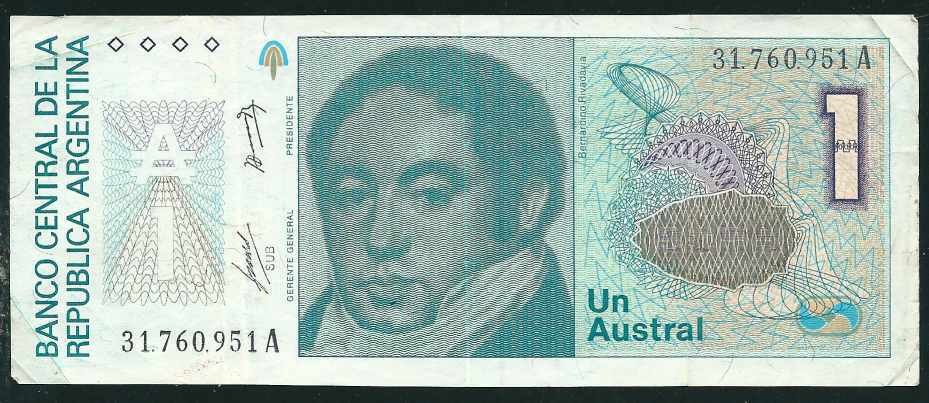
The short-lived Austral was an interesting experiment in minimalism. Interestingly, banknotes of this currency look somewhat similar to the concurrent (now obsolete) series of Swiss franc notes. Or is it just me?


The newest peso, despite its inflationary problems, is cleanly designed.


But Argentina's real strength is in its higher-denominated coins. See, the $1 coin has a unique idea - the inner core's design is a near-exact replica of a historic Argentinian gold coin. I think this is a really clever way to re-use a beautiful and historically significant classic coin design and I wouldn't mind seeing more countries display their numismatic heritage like this.


The $2 coin is also solidly designed.


So, in my opinion - Argentinian coins have always seemed to be on the cutting edge of design, and are always a bit too "modern-looking" - those minimalist San Martin coins from the 1950s are incredibly ahead of their time. But now that we are in the modern era, I think Argentina's coins have really come into their own.

And, of course, I can't write a whole post on Argentinian currency without posting one of their very silly Los Malvinas commemoratives.

Don't you have enough islands of your own to worry about?!!
Citação: nalaberongAnd, of course, I can't write a whole post on Argentinian currency without posting one of their very silly Los Malvinas commemoratives.

Don't you have enough islands of your own to worry about?!!
It would be a better to ask the British this question as Argentina doesn't have many islands but UK does...  :° And it was clearly not Argentina who wanted to rule the whole world, if I'm right. But anyhow I'm neutral in the question and I think it's senseless to discuss about this here. Your sentence was just quite absurd...
I'm not orange and also in other things I'm not a Donald at all. DonChori like Don Felipe or Doña María, por favor.
We will have all time to clash about Falkland/Malvinas when they will be subject to their own chat, as they have their own coinage  :°  X-D
Administrateur du catalogue, référent de nombreuses nations antiques et de la Lorraine.
Catalogue administrator, numerous Antique nations and Lorraine referee.
Citação: DonChori
Citação: nalaberongAnd, of course, I can't write a whole post on Argentinian currency without posting one of their very silly Los Malvinas commemoratives.

Don't you have enough islands of your own to worry about?!!
It would be a better to ask the British this question as Argentina doesn't have many islands but UK does...  :° And it was clearly not Argentina who wanted to rule the whole world, if I'm right. But anyhow I'm neutral in the question and I think it's senseless to discuss about this here. Your sentence was just quite absurd...
+1
Citação: chomp-masterWe will have all time to clash about Falkland/Malvinas when they will be subject to their own chat, as they have their own coinage  :°  X-D
Exactly my thought! :-)

Hola, solo quería saludar y comentar que me dedico a la fotografía artística, por acá les muestro algunas de las fotografías de monedas que vengo haciendo, algunas mías, pronto seguiré compartiendo mi trabajo, mi pasión y colección! Espero que les guste:


Fuente: https://tupropiapaginaweb.net/

» Política do fórum

O fuso horário usado é UTC+2:00.
O horário atual é 08:08.