Honest question: Are you being paid by a third party to upload so systematically those island-nation NCLTs?
I find it hard to believe that you do this for free, but I'll be happy if you prove me wrong.
As it is, this work looks to me like free publicity on Numista for some of the worst issuers, those who are most damaging to the hobby with their continuous flow of senseless commems.
1. There are different collectors with interest in different type of coins. If someone doesn't collect the types you prefer, it doesn't stop them from being a collector.
Pennywise and Turkey coins were issued by New Zealand Mint. I understand when you call some stupid companies rubbish, but NZ Mint? Btw, Turkey coin is commemorating 30th Anniversary of Friends
2. Thanks for calling me a bot. The administrators, especially @Jarcek knows me well. And i have been attending some of the Referee zoom calls in the past.
3. I have joined Numista in 2018 and loved it. And when Administrators offered me a referee position for mostly NCLT coins I gladly accepted. And since then this became my main hobby.
4. If you have any suggestions re what should be regarded as coins and what not, please open a new thread in Numista coin catalogue page and i am sure Admins will evaluate your request and decide the best.
Thanks for the reply, @al-Bakuvi – As I said, this was an honest question; I could not imagine that anyone would do this so steadily for free, and I am not alone in this.
Sadly, while your commitment is exemplary, we have here a further example of how, in the 21st century, the private sector finds ways to advertise its products for free and, just as importantly, how it has ways to give its products a veneer of legitimacy for free.
Yes, collectors are free to collect what they want, but with that attitude, all online coin catalogues are being polluted with fake coins at an almost exponential rate. Numista is free to play along and be a mouthpiece for private corporations, but I'm one who refuses to be compliant with the profit-making corporate world and how it tries to manipulate us into docile consumers.
Now "Niue" (actually Power Coin and others) dares to produce over 900 new types per year, virtually none of which has anything to do with Niue's culture. We just legitimize this output for the sake of completeness in the catalogue? That's pretty pathetic.
New Zealand Mint has nothing to do with the state of New Zealand. They are a non-state mint that produces the same kind of NCLT as Power Coin and other such private mints. I myself didn't know this fact until two years ago. It's unfortunate New Zealand didn't register the name long time ago, even if they don't have a mint.
I'll leave it at that. People are of course free to disagree.
1. There are different collectors with interest in different type of coins. If someone doesn't collect the types you prefer, it doesn't stop them from being a collector.
Judging by the NRI of these coins, collectors (at least those who are Numista members) are pretty much ignoring these NC coins coming out of Niue. The lowest NRI I saw on 2020 coins (random sample) was 87 (5 members).
Thanks for the reply, @al-Bakuvi – As I said, this was an honest question; I could not imagine that anyone would do this so steadily for free, and I am not alone in this.
Sadly, while your commitment is exemplary, we have here a further example of how, in the 21st century, the private sector finds ways to advertise its products for free and, just as importantly, how it has ways to give its products a veneer of legitimacy for free.
Yes, collectors are free to collect what they want, but with that attitude, all online coin catalogues are being polluted with fake coins at an almost exponential rate. Numista is free to play along and be a mouthpiece for private corporations, but I'm one who refuses to be compliant with the profit-making corporate world and how it tries to manipulate us into docile consumers.
Now "Niue" (actually Power Coin and others) dares to produce over 900 new types per year, virtually none of which has anything to do with Niue's culture. We just legitimize this output for the sake of completeness in the catalogue? That's pretty pathetic.
New Zealand Mint has nothing to do with the state of New Zealand. They are a non-state mint that produces the same kind of NCLT as Power Coin and other such private mints. I myself didn't know this fact until two years ago. It's unfortunate New Zealand didn't register the name long time ago, even if they don't have a mint.
I'll leave it at that. People are of course free to disagree.
For this reason these coins have a special category: non-circulating coin These coins are more for the Star Wars, Star Trek, Pokemon, Harry Potter, etc. fans, than for the hardcore coin collectors I also personally do not collect them, but Numista is open for every coin collector, not depending on what type they collect, ancient Greece, US quarters, or Harry Potter theme NCLT coins are produced by every country, UK, Germany, Turkey, USA also issue them, but in case of Niue, Palau or Cook Islands the scale is different, I agree
Powercoin is used here frequently, because it is one of the few websites that allows us to use their pictures; with the same luck it could be any shop that does the same
1. There are different collectors with interest in different type of coins. If someone doesn't collect the types you prefer, it doesn't stop them from being a collector.
Judging by the NRI of these coins, collectors (at least those who are Numista members) are pretty much ignoring these NC coins coming out of Niue. The lowest NRI I saw on 2020 coins (random sample) was 87 (5 members).
What I am going to say is a very humble opinion and I am not criticizing anyone, only that it might be more convenient to focus all this passion and energy on studying and cataloging the ancient coins that are missing from Numista and not give so much importance to these countries.
It would be good if this happened because it is very difficult and very expensive to buy or obtain, for example, catalogs of the Kushan Empire, and if we all contributed our grain of sand we could do something impressive in Numista, in addition to giving a personal satisfaction and incredible knowledge to the person who studied and added a new missing ancient coin.
I mention this example from the Kushan Empire because when I wanted to add my coins they were not there and, as there are no reference catalogues, I had to study these coins and consult experts and numismatic centres in order to be able to include them in the catalogue and this is something that usually happens with ancient coins in general.
By adding these coins to the catalogue now they will serve as an aid to future Numista users and they can be used as a reference in the coming years for boot Numismatics, collectors and historians/universities.
In some ways I was thinking the same, @Dieter83, but just as the people who learned to make sour dough bread during the pandemic were not the same as those who were hoarding toilet paper (😁), the collectors of NCLTs are not the same as the collectors of ancient coins. So I suppose there is room for both, though I wished the NCLTs we're talking about here were classified with exonumia. As my signature says, postage stamps have much more of a numismatic value than those pseudo-coins.
Yet stamp collecting is also plagued by the similar phenomenon of CTOs, i.e. “cancelled-to-order” stamps. States, mostly small or poor, have series of stamps produced for them with popular themes such as flowers, butterflies, space exploration, JFK, etc, that, in the process of printing, are gently cancelled in a corner to sell them to collectors. One of the earliest and worst offenders was (is?) Tonga, which produced a stream of ugly stamps in round and other unusual shapes with bright colours and gold- and silver-coloured inks.
Back to coins, I agree that the catalogue will become more and more useful as ancient (and medieval) coins are added towards completion. I do research in both ancient and modern numismatics and often use the excellent search function in the catalogue, but I always remember that, for Antiquity, the search results are likely to be incomplete and even unrepresentative.
For the modern period it's a little annoying that you have to select and/or deselect certain types of coins every time you do a search, but I admit it's a minor problem. By the way, even while searching for a theme in ancient coinage, you often end up with more NCLT than ancient results, so if you didn't think of it first, you have to go back and deselect “non-circulating” in the filters box.
Thank you very much Camerinvs for your feedback, the world of collecting is very wide and varied and that is very good.
In my case I collect everything: from ancient, medieval and contemporary coins, through banknotes to saltpeter tokens and other things of exonumia.
I fully agree and I hope that this forum on what is happening with Niue as a conclusion serves to organize better the Numista catalog, for instance using the different examples of proposals that were mentioned above in previous messages so that at least it could be easier to search coins and organize them independently of the type of collector that one is.
Traditional countries like Canada for example also have the same problem where the circulating coins are mixed with investment coins and with the NCLTs
E.g. when you try to find a regular circulating 50 cent coin into Canada:
Yes, the Canadian 50¢ coin is an excellent example of the problem. It is still technically a circulating coin, though none was technically produced for circulation after 2002. This is why the 50¢ was included in the Order of Council to change the obverse to Charles. The Mint doesn't need orders of council to decide on its NCLTs, neither obverse nor reverse types.
And let me add that I am a fierce critic of the Royal Canadian Mint, though they don't produce a tenth of the trash that private mints produce for the Pacific micro states.
When the RCM started to produce square 3¢ coin, pure gold pennies, and other such ridiculous things, I though (and still think) it was detrimental to the hobby. There was a president of the Canadian Numismatic Association who was very critical of the RCM already in the 1980s!! Imagine: the 1980s! He is probably turning in his grave given the current madness.
In the defense of NCLT there are some countries that have licensed their names out tastefully, such as Nicaragua. With some exceptions, most of the coins issued by Nicaragua have something to do with their history or current events. Additionally all Nicaraguan coins are available for purchase at the Central Bank of Nicaragua in Managua, which is quite rare for poorer nations.
Master Coin Referee
Coin referee for CRI, GTM, HND, NIC, PAN, and SLV.
Revisor principal de monedas
Revisor de Numista para monedas de CRI, GTM, HND, NIC, PAN y SLV.
I’m just confused as to why a Mayan pyramid would have Egyptian and Polynesian symbols on it 🤔
I would bet that you can find a theory that links all the pyramids. :D
True, but those are usually people who also believe in “Ancient Aliens”… I understand of course that you don't claim to believe these wacko theories, Jarcek. By the way, archaeologists have to deconstruct some crazy claims on the radical left that the pyramids of Sudan were the inspiration for those of Egypt, though the youngest Egyptian pyramids are at least a thousand years older than the oldest Sudanese pyramids. Even the pyramids of these two neighbouring states, therefore, have basically nothing in common, i.e. the Sudanese built their pyramids (which are also much smaller) at a time when such structures were already an obsolete cultural concept in Egypt.
I agree with Sargon that this is bad taste (to translate his 🤔).
And RegularCoiner, while I agree that this is not a coin, we're both lucky that no member is registered under the name PyramidCoiner.
Otherwise, it's true that Nicaragua has had better taste in issuing NCLTs. Fun fact: In 2023 Niue issued 976 more NCLTs than Nicaragua.
Nicaragua's modest use of NCLT's (100 in 57 years) can't be used to justify Niue's gargantuan output of NCLT's 7,075 (plus whatever number Numismaster hasn't assigned a KM number to yet) in 37 years.
Nicaragua's modest use of NCLT's (100 in 57 years) can't be used to justify Niue's gargantuan output of NCLT's 7,075 (plus whatever number Numismaster hasn't assigned a KM number to yet) in 37 years.
Of course and, actually, even though I don't like any NCLTs, I would refer to Nicaragua if I wanted to show an example of how it should be done. Some_Nerd is rigt that, basically, Nicaragua issues Nicaragua-related NCLTs. Niue has gone mad… and they probably don't even know it: they just care about the bottom line ($$$).
Based on al-Bakuvi's comment, it looks like we may reach a 1000 NCLTs for Niue in 2023?? This is more than ONE NCLT for every TWO Niue inhabitants… Pure insanity or, as I like to say, numismatic incontinence.
There are only 937 2023 Niue coins in Numismaster with a KM number (only 21 in Numista with a KM number reference). I wonder why Numismaster isn't keeping up. They're well on the way in 2024 with 329 so far.
I’ve read through this thread a while ago, people keep commenting keeping it at the top. I figured I’d chime in at least once, especially since I just bought this super cool “coin” from Niue that is literally a working Roulette Wheel! Regardless of your opinion on Niue, you got to admit this is awesome, lol. N#354702
I can understand everyone’s point of view here on the issue with Niue and other countries as well, and my opinion is honestly pretty mixed on the subject.
Part of me likes that companies can make these coins commemorating movies, cartoons, or just cool designs in general that attract both existing collectors, bullion collectors, and believe it or not, also attract new collectors to the hobby! (Incredible isn’t it) They’re not simply garbage, even though I can see why you may think that based on your traditional styles of collecting.
I as a collector for example gave my brother this coin N#177969 for his birthday since he is a big Marvel fan and loves Hulk. Even though he’s not a collector, it does get him a bit interested in and at least appreciate coin collecting when otherwise he never would have. Same thing for my dad who loves Elvis so I got him a few Elvis coins such as this one from the Marshall Islands N#83444 and this one from the Cook Islands N#425674.
Another part of me agrees that they shouldn’t be allowed to keep profiting off of these countries by slapping their name on an ounce of silver with a cool design and selling it for $100 plus shipping. I agree it has gone way too far.
Side note, but pardon my ignorance if I’m wrong here, but when countries like Fiji, Niue, etc. license out their country to be used by private companies on NCLTs, is it similar to how Tuvalu licensed out their domain name (.tv) for companies to use, and it made them a lot of revenue (a significant % of their GDP). Do the countries actually make money from companies that put their name on coin?
Back to the subject, I understand that there’s a growing grey area on what counts as a “coin” vs “exonumia” with every new release from these companies, and it can’t just be a matter of opinion, there needs to be a concrete rule or change so this topic doesn’t keep coming up every single day. While I don't hate how it is now with them in the coin category as "Not intended for circulation", I've heard ideas like adding a new section altogether that's sort of a mix between the coin and exonumia category. This would be a huge endeavor and likely generate negative feedback almost instantly if it were ever implemented.
For people like me that want to collect a coin from every country, this would be a big issue as there are many that don't have circulating coins and you have no choice but to use a NCLT to fill a spot. For example the very country I chose to be a referee for (Burkina Faso) has only NCLTs and I finally bought one of them a few days ago:
The only UN country that doesn't have any coins at all is Micronesia which is honestly surprising it has gone all these years (since 1986) without selling out their name to be used on commemoratives.
Finally, I agree with and appreciate al-Bakuvi for generously giving his time to improve the Numista catalogue and I can see why as I too have gone from 0,0,0 to 160 pages added, 749 sales records and examples added, 1174 edits just in the last few months because I decided that I want to help improve and add to the catalogue as much as I can, even if there's no reward/pay. I literally made a whole google doc with links to coins that need to be added to Numista (I should probably do a separate post about it, but just figured I'd share my dedication, lol)
Sorry this was so long, but before I go I’ll leave you with some of my favorite NCLTs I’ve found over the last year or so for your enjoyment: N#421914N#424741
Side note, but pardon my ignorance if I’m wrong here, but when countries like Fiji, Niue, etc. license out their country to be used by private companies on NCLTs, is it similar to how Tuvalu licensed out their domain name (.tv) for companies to use, and it made them a lot of revenue (a significant % of their GDP). Do the countries actually make money from companies that put their name on coin?
Yes. — The Niue Philatelic and Numismatic Act 1996 provides for the creation of the Niue Philatelic and Numismatic Company. Its purpose is “to administer philatelic, numismatic and other revenue earning options and services”. The Company “shall pay a dividend to the Government as agreed by the Board”.
Interesting. If anyone in Niue even knows about all these coins being produced (I doubt it) I doubt they would want them to stop since it is in fact benefiting/funding their government, at least a little bit.
Parker Freeze (@freeze_coins)
• Referee for coins from Burkina Faso
Finally, I agree with and appreciate al-Bakuvi for generously giving his time to improve the Numista catalogue and I can see why as I too have gone from 0,0,0 to 160 pages added, 749 sales records and examples added, 1174 edits just in the last few months because I decided that I want to help improve and add to the catalogue as much as I can, even if there's no reward/pay. I literally made a whole google doc with links to coins that need to be added to Numista (I should probably do a separate post about it, but just figured I'd share my dedication, lol)
Sorry this was so long, but before I go I’ll leave you with some of my favorite NCLTs I’ve found over the last year or so for your enjoyment: N#421914N#424741
No problem! I just wanted to disprove the idea that nobody would do that much work for free, lol. If I had more free time outside of school, I’d apply to be a referee for Cameroon or Chad but they have so many coins being made it would be hard to keep up. It is still a lot easier and quicker, no doubt, than adding ancients like people were mentioning, but both are important for an accurate, up-to-date catalogue like Numista!
Parker Freeze (@freeze_coins)
• Referee for coins from Burkina Faso
At the time of writing, there are 47 pseudo-coins from Niue in the Latest additions to the catalogue. 47. None of these objects commemorates anything that is relevant to the culture or history of Niue. None. All they do is fullfilling a profit-making scheme. Sadly, Numista is becoming a platform for Power Coin and other such businesses to advertise and legitimize their products — and they don't even need to do any work of their own… it's handed over to them on a silver platter.
We also need to look ahead. What percentage of the catalogue will be taken over by Power Coin, New Zealand Mint, etc. in five years from now? … in ten years from now? The current trend of circulating (incl. circ. commemoratives) vs. non-circulating types is indicative:
This little table was not a waste of time since it's actually useful to me as I'm researching the concept of NCLT and hope to publish something about it. I focus mostly on the Canadian case, but Niue and other micronations are instructive when you compare and contrast.
Altogether, how Numista organizes the catalogue doesn't matter much, except that I would like it to have more of an educational value, especially with new collectors in mind.
Something the bear in mind: countries that use calenders besides the Gregorian are excluded from you search. If you want to include them, use the Gregorian date field instead of year.
Master Coin Referee
Coin referee for CRI, GTM, HND, NIC, PAN, and SLV.
Revisor principal de monedas
Revisor de Numista para monedas de CRI, GTM, HND, NIC, PAN y SLV.
Problem is much wider than that of “micronations” or dot-size islands: in 2023
Australia issued 6 Circulating, 22 Commemorative and 229 NCLTs. For comparison:
Germany - 7 Circulating, 2 Commemorative and 15 NCLTs
Similar situation is with most Commonwealth countries.
If we want to keep Numista catalogue free of this pollution, NCLTs should be moved to Exonumia as separate category.
Another problem is that many coins (I'm not speaking of bullion), issued in more (sometimes MUCH more) than half a million pieces and seen in VF, XF… condition are categorized as NCLTs, when this clearly cannot be correct (just an example: N#4260)
countries that use calendars besides the Gregorian are excluded from your search. If you want to include them, use the Gregorian date field instead of year.
Good point. Still, the general progression towards an increase of NCLTs in this large sample is indicative of the general trend.
I was also aware of the fact that the year 2023 is probably a little less complete than previous years. In addition it's easier to add a year line to an already existing circulating coin than to create a new page for some NCLT that no-one will ever see or hold except if someone gives it to you at Christmas or for your birthday. So, the ratio of NCLTs should probably be a little higher than what I have provided.
Dejan
Problem is much wider than that of “micronations” or dot-size islands:
Of course. But this thread is about one such micronation, and they are doing much worse junk than Canada or Australia, especially that they don't even have mints of their own.
Dejan
in 2023
Australia issued 6 Circulating, 22 Commemorative and 229 NCLTs. For comparison:
Germany - 7 Circulating, 2 Commemorative and 15 NCLTs
Similar situation is with most Commonwealth countries.
I entirely agree. The only thing that is somewhat positive in the case of the RCM and the RAM is that all their NCLTs are at least loosely connected to Canadian and Australian cultures respectively. This includes the Chinese New Year issues since both countries have an important minority of citizens of Chinese background.
Dejan
If we want to keep Numista catalogue free of this pollution, NCLTs should be moved to Exonumia as separate category.
My suggestion would be to have two parallel coin catalogues: one for real coins and the other for that metallic junk (since technically, from the legal point of view, they are “coins”). The key would be to make it easy for anyone to merge them before a search or to upload their new coins. So, perhaps a pop-up window would do the trick.
By the way, many items in the exonumia category have been used for payment, unlike the great majority of NCLTs. As my signature says, even stamps have had much more numismatic value than the NCLT pseudo-coins.
Dejan
Another problem is that many coins (I'm not speaking of bullion), issued in more (sometimes MUCH more) than half a million pieces and seen in VF, XF… condition are categorized as NCLTs, when this clearly cannot be correct (just an example: N#4260)
Yes. And I've noticed that mistakes were made (and then fixed) with the new Charles III coinages. When the NCLTs are of the same physical characteristics as the regular circulating coins, it gets confusing. Who in the public would know the difference between the Australian “Dollarbucks” coins, e.g. this one circulating and that one not?
I entirely agree. The only thing that is somewhat positive in the case of the RCM and the RAM is that all their NCLTs are at least loosely connected to Canadian and Australian cultures respectively. This includes the Chinese New Year issues since both countries have an important minority of citizens of Chinese background.
Yes. And I've noticed that mistakes were made (and then fixed) with the new Charles III coinages. When the NCLTs are of the same physical characteristics as the regular circulating coins, it gets confusing. Who in the public would know the difference between the Australian “Dollarbucks” coins, e.g. this one circulating and that one not?
Regarding the two points above…
Most if not all Australian NCLT issued by the RAM and the Perth Mint are very much connected to Australian cultures. Koalas, Kookaburras, Kangaroos, Australian Citizenship, ANZAC - Lest We Forget. The Australian Light Horse, Henry Lawson 1867 - 1922, Trans Continental Railway. Australian Women in War, etc etc.
The two Dollar Bucks coins you quoted above are easy for the public to distinguish. The circulating one is being issued by the Post Office into change, I got 5 of them today. The other one you quoted is only available at a premium price as part of a set of 10. However because the NCLT version is identical in composition & size to the circulating coin (but not design) they will eventually find their way into circulation. Australia Post have in the past actually dumped NCLT's from sets into Circulation when some of the not very popular releases didn't sell all that well.
That is one of the very interesting things you find out when you start collecting Australian coins from circulation. Lots of unusual NCLT's pop up all over the place when you noodle a few coin rolls. Be it $2, $1, 50c or 20c coins you never know what you might find.
So there could possibly be another category … NCLT coins that are made of standard metals and are identical in weight and size to circulating coins. They also have the standard Obverse as per circulating coins.
Regards Mike
Master Referee - See my profile for what I collect.
(since technically, from the legal point of view, they are “coins”).
Let's discuss this a little about Niue in particular. Are they in fact legal tender anywhere? Their official currency is the Dollar of New Zealand. Can they be used to buy a loaf of bread anywhere that the Dollar is accepted, or even one place? I don't mean bartering silver for a product.
I entirely agree. The only thing that is somewhat positive in the case of the RCM and the RAM is that all their NCLTs are at least loosely connected to Canadian and Australian cultures respectively. This includes the Chinese New Year issues since both countries have an important minority of citizens of Chinese background.
Yes. And I've noticed that mistakes were made (and then fixed) with the new Charles III coinages. When the NCLTs are of the same physical characteristics as the regular circulating coins, it gets confusing. Who in the public would know the difference between the Australian “Dollarbucks” coins, e.g. this one circulating and that one not?
Regarding the two points above…
Most if not all Australian NCLT issued by the RAM and the Perth Mint are very much connected to Australian cultures. Koalas, Kookaburras, Kangaroos, Australian Citizenship, ANZAC - Lest We Forget. The Australian Light Horse, Henry Lawson 1867 - 1922, Trans Continental Railway. Australian Women in War, etc etc.
The two Dollar Bucks coins you quoted above are easy for the public to distinguish. The circulating one is being issued by the Post Office into change, I got 5 of them today. The other one you quoted is only available at a premium price as part of a set of 10. However because the NCLT version is identical in composition & size to the circulating coin they will eventually find their way into circulation.
That is one of the very interesting things you find out when you start collecting Australian coins from circulation. Lots of unusual NCLT's pop up all over the place when you noodle a few coin rolls. Be it $2, $1, 50c or 20c coins you never know what you might find.
So there could possibly be another category … NCLT coins that are made of standard metals and are identical in weight and size to circulating coins. They also have the standard Obverse as per circulating coins.
Regards Mike
It's important to point out that I wrote “at least loosely connected”. This means: “loosely connected or very much connected”.
You confirm what I wrote that once in circulation the NCLTs of this type are indishtinguishable from circulating coins.
My way of making two different listing of coins would involve negative criteria: If a coin is NOT of a denomination used in circulation and NOT of the same size and composition as circulating coins, then it goes in List B. Canadian examples: 1¢ gold, 3¢ silver, $8, $15, $350, $1,000,000, etc.
sirian1
Camerinvs
(since technically, from the legal point of view, they are “coins”)
Let's discuss this a little about Niue in particular. Are they in fact legal tender anywhere? Their official currency is the Dollar of New Zealand. Can they be used to buy a loaf of bread anywhere that the Dollar is accepted, or even one place? I don't mean bartering silver for a product.
Early in the thread, I cited the Niue Consumption Tax Act 2009 which tells you that Niue NCLTs are not valid as a means of payment:
Meanwhile, foreign currencies are OK since they give the procedure to convert them (further on in the document). They'll take the Canadian dollar or the Swedish krona, but don't insult them by offering to pay in Niue NCLTs…
The argument usually given (e.g. on the RCM website) is that two parties in a transaction can agree on a payment with NCLTs, but the seller is not obliged to accept this kind of currency. But this is true of any goods. Some people trade packs of cigarettes or jewelry for goods.
Early in the thread, I cited the Niue Consumption Tax Act 2009 which tells you that Niue NCLTs are not valid as a means of payment:
Meanwhile, foreign currencies are OK since they give the procedure to convert them (further on in the document). They'll take the Canadian dollar or the Swedish krona, but don't insult them by offering to pay in Niue NCLTs…
The argument usually given (e.g. on the RCM website) is that two parties in a transaction can agree on a payment with NCLTs, but the seller is not obliged to accept this kind of currency. But this is true of any goods. Some people trade packs of cigarettes or jewelry for goods.
Yes, I read that when you posted it and again today. I can exchange any valid “foreign” currency at my bank for US dollars. I haven't tried but I doubt very much if I could exchange Niue dollars for US dollars. There is no exchange rate and they are not recognized outside of Niue as NZ dollars.
I looked quickly at the Niue catalogue and I don't think a single coin ever has the same specifications (composition + diameter) as the official NZ coinage. They have, for example, some 5¢, 10¢, 20¢, etc. in base metal, but always bigger and with an earlier portrait of the Queen.
I think they intentionally don't produce any coin of the same physical specificity as the circulating (i.e. NZ) coins. This is probably for legal reasons, to make sure there is no confusion between real and fake currencies.
Going back on separate lists for different categories of coins, NZ is an interesting case. Looking at circulating types, NZ issues base metal proof year sets every year, though in most years no circulation coin is produced (see e.g. under the 50¢ 2006–2023). These coins are quite different from NCLTs in weird face values and precious metals. I would keep them where they currently are.
The NZ coins are quite different in that out of the set they can be spent just like the ones from circulation years. This is like the US President coins that are NCLTs which I periodic get in change from vending machines.
The NZ coins are quite different in that out of the set they can be spent just like the ones from circulation years. This is like the US President coins that are NCLTs which I periodic get in change from vending machines.
That's exactly my point. Though non-circulating and legal tender, once in circulation, they're indistinguishible from other circulating coins to the general public.
The presidential series is interesting because, if I'm not mistaken, the earlier coins in the series were circulating, and then they switched to non-circulating, but people use them in vending machine. By the way, the fact that they have the same specifications as circulating coins means that vending machines accept them. Modern vending machines rely on weight and size, but also composition, and would reject a silver quarter, for example.
Another interesting case is that of the 1892–1893 Columbian Exposition halves. They struck way too many and the extra load ended up in circulation. I suppose that's why we now see more 1893 than 1892.
In Canada back in 2019 I got in my change a 2000 W (Winnipeg) “loonie”. These are otherwise identical with circulating loonies but were issued only in sets. Few people would pay attention to the small W at the bottom of the effigy… There are also the birthday, wedding, and Christmas loonies which come only in sets. The reverse type is different but the physical specifications are the same as circulating loonies.
Early in the thread, I cited the Niue Consumption Tax Act 2009 which tells you that Niue NCLTs are not valid as a means of payment:
Meanwhile, foreign currencies are OK since they give the procedure to convert them (further on in the document). They'll take the Canadian dollar or the Swedish krona, but don't insult them by offering to pay in Niue NCLTs…
The argument usually given (e.g. on the RCM website) is that two parties in a transaction can agree on a payment with NCLTs, but the seller is not obliged to accept this kind of currency. But this is true of any goods. Some people trade packs of cigarettes or jewelry for goods.
Yes, I read that when you posted it and again today. I can exchange any valid “foreign” currency at my bank for US dollars. I haven't tried but I doubt very much if I could exchange Niue dollars for US dollars. There is no exchange rate and they are not recognized outside of Niue as NZ dollars.
The convertibility of any currency in the US is an indication of nothing. Niue dollars are produced under the linsence granted by the local Niue government and pegged to the NZ dollar on 1:1 ratio.
By providing its license to private mints to issue coins under its name, Niue guarantees that if you for some reason would want to exchange N#102466 for circulating 250 NZD they will have to exchange this
In the EU we have euro and each country issues its own circulating and non-circulating commemorative euro coins. If you go with N#417119 to the German Bundesbank they will exchange this to normal 20 euro without any limit or questions, but if you will visit Banque de France with the same coin, they will reject as they do not have to exchange other country's commemorative coins.
In Niue Consumption Tax Act 2009 they specify the definiton of Money as any coin or paper currency that is legal tender in Niue, other than a coin or paper currency that is a collector’s piece.
Cambridge dictionary confirms, other than is a synonym of except
Except/other than is used to exclude one group from the whole:
if you say I visited all states other than/except for Texas, it makes sence, as texas is a state, but you didn't visit it but if you say I visited all states other than/except for San-Francisco they will be amused and will correct you San-Francisco is not a state
In this act they do not reject the legal tender status of NCLTs, but confirm they are not intended for the circulation, which is also obvious from the name Non-Circulating Legal Tender
Actually the term is Non-circulating coin. Legal tender is not part of the Numista definition. But regardless, I think we agree, Niue coins are not Money.
In Niue Consumption Tax Act 2009 they specify the definiton of Money as any coin or paper currency that is legal tender in Niue, other than a coin or paper currency that is a collector’s piece.
Cambridge dictionary confirms, other than is a synonym of except
Except/other than is used to exclude one group from the whole
Nobody contests the fact that NCLTs are technically money, i.e. from the technical legal point of view. That's why it's excluded from the means of payments in the Act, because in reality it's not money. This is just a legal figment.
They (Niue and contractors) also know that nobody will be crazy enough to exchange their Niue NCLTs for real NZ dollars since the loss would be significant — or even huge in the case of gold. The Niue $250 Fantasia is worth over $3500 bullion. The same rationale applies to almost all their coins. The scheme is designed as a money grab from the start since the face value is significantly below the bullion value. What's more, the bullion value is below the selling price. Numismatics has nothing to do with all this.
At best these “coins” can be used as bullion, but bullion is not coinage since you have to know the composition and weight of each individual piece and assess its value based on the current price of gold, silver, platinum, etc. The idea of coinage in 8th-century BCE Lydia was to put an end to this cumbersome process by guaranteeing the standard of a piece of metal with a symbol of the issuing authority stamped on it.
If two parties agreed to a payment in Niue NCLT, I can't imagine the debtor would do so except at bullion value — unless he has a gun to his head. The $250 face value means nothing except to give the illusion that this is real money.
What's more, virtually none of this output ever reaches the shores of Niue. Unlike the RAM or RCM, Niue doesn't need to buy any gold or silver bullion; they don't need any artists to design their types (which have nothing to do with Niue culture anyway) nor any engravers. They just wait for the royalties for the use of their name.
If we're not able as collectors to see what's going on and obediently accept what these for-profit corporations try to sell us, then we're part of the problem.
rsirian1
Actually the term is Non-circulating coin. Legal tender is not part of the Numista definition. But regardless, I think we agree, Niue coins are not Money.
True. They are coins by the processus of coinage, but they are not money considering the face value stamped on them.
Can I redeem a collector coin at a bank or use it as currency to purchase goods or services?
All coins manufactured by the Royal Canadian Mint are legal tender. However, unlike Canadian circulation coins, collector coins are non-circulating legal tender (NCLT). As such, these coins are not intended for daily commercial transactions and accepting them as payment or for redemption is at the discretion of businesses and financial institutions.
We have a process in place to reimburse financial institutions the face value of redeemed NCLT coins, once they have accepted them from a customer and returned them to the Royal Canadian Mint. In the event a bank branch is unaware of this procedure, customers are advised to contact us with the coordinates of the bank branch, we will take steps to inform the branch of the redemption process.
As collector coins can only be redeemed at face value by businesses and financial institutions willing to accept them, it is recommended that individuals wishing to sell a collector coin first consult with a coin dealer, who is more likely to offer a price above face value.
The terms “redemption / reimburse / returned / procedure” are quite telling. Redemption exists for circulating coins and paper money, but it's usually after long use or demonetization (which happened only once in Canadian notaphilic history, in 2021).
In Niue's case, I suppose you would have to mail your NCLTs and hope for the best…
Actually the term is Non-circulating coin. Legal tender is not part of the Numista definition. But regardless, I think we agree, Niue coins are not Money.
True. They are coins by the processus of coinage, but they are not money considering the face value stamped on them.
Maybe we're saying the same thing. What I meant was that the Niue Consumption Tax Act 2009 specifically excluded collector coins from the definition of money. So the Niue government does not consider any of the coins they allow to be produced as being money. So by their definition legal tender yes, money no. This seems to be contradictory as I can't find any definition of legal tender that doesn't include words like in the definition in Merriam-Webster, money that is legally valid for the payment of debts and that must be accepted for that purpose when offered. So legal tender must by money and be valid for payment… Niue says their coins are legal tender but not money. They're making up their own definition of legal tender.
Which they are quite free to do so. They are basically saying that you cannot pay with these coins anywhere, but central bank will exchange them if any fool comes to them to do so.
Which they are quite free to do so. They are basically saying that you cannot pay with these coins anywhere, but central bank will exchange them if any fool comes to them to do so.
Apparently, yes they are. Does any other dictionary, catalog, government define legal tender to include something that is not money?
NB — I see al-Bakuvi's point about the use of “other than”, but his example:
“I visited all states other than/except for Texas”
is misleading because whether you don't visit Texas of the 50 states is arbitrary; it has nothing to do with the categorization of Texas as a state. You could have visited all the states other than Delaware, or other than Oregon.
But this is not true with regard to Niue NCLT. It's not that the Consumption Act happens to turn down Niue NCLT instead of turning down the British pound or the Euro. No. They turn NCLT down because it's not real money.
Which they are quite free to do so. They are basically saying that you cannot pay with these coins anywhere, but central bank will exchange them if any fool comes to them to do so.
Apparently, yes they are. Does any other dictionary, catalog, government define legal tender to include something that is not money?
My wild guess is that by “money” they mean “means of ordinary payment”.
1988's Walter Breen's Complete Encyclopedia of U.S. and Colonial Coins gives a definition for this as well:
I thought Niue coins could not legally circulate in Niue?
I doubt Mr. Breen would still hold to his definition 36 years later. It used to be that indeed, NCLTs almost always corresponded with real circulating coins in face value and diameter, but the Niue and RCM toys shown above makes this a thing of the past.
A fun fact I just realized. Numismaster has assigned KM numbers to 937 Niue 2023 “coins.” They have yet to catch up with the three 2021 Philippines standard circulation coins.
I just looked at it, and this is what I found. Under the reign of King Charles III, which is about two years on now, he has only been on circulating coins for a year (in most places). In total, there have been (on Numista) 1,585 coins from Niue, 679 from the UK, 409 from Australia, 270 from Solomon Islands, 227 from Canada, 197 from the Isle of Man, 166 from the Cook islands, 165 from Guernsey, 110 from Gibraltar, and more. How many of these actually circulated? Officially, 108. These includes Elizabeth Head pieces where he is not present. This means that 0.068% of the coins issued under his reign were ever meant to see a till. Now, my question is, out of the 1477, how many were actually sold in meaningful numbers. Who on Earth is buying these? You can't convince me these two coins are the same in quality or people lining up to buy them:
Almost like plated coins aren't bad enough, ITS PLATED WITH 9K GOLD.
The price on Ucoin.net is 31 USD. There's three coins in the set (silver and 24K gold plated). At 93 USD, you would be most of the way to just buying a high grade one of these beauties instead:
I just looked at it, and this is what I found. Under the reign of King Charles III, which is about two years on now, he has only been on circulating coins for a year (in most places). In total, there have been (on Numista) 1,585 coins from Niue, 679 from the UK, 409 from Australia, 270 from Solomon Islands, 227 from Canada, 197 from the Isle of Man, 166 from the Cook islands, 165 from Guernsey, 110 from Gibraltar, and more. How many of these actually circulated? Officially, 108. These includes Elizabeth Head pieces where he is not present. This means that 0.068% of the coins issued under his reign were ever meant to see a till. Now, my question is, out of the 1477, how many were actually sold in meaningful numbers. Who on Earth is buying these? You can't convince me these two coins are the same in quality or people lining up to buy them:
Almost like plated coins aren't bad enough, ITS PLATED WITH 9K GOLD.
The price on Ucoin.net is 31 USD. There's three coins in the set (silver and 24K gold plated). At 93 USD, you would be most of the way to just buying a high grade one of these beauties instead:
Are there still many red elephants in Canada nowadays? Or are they all extinct now?
Are you sure the RCM made these? It looks to me like it's some European company that buys silver Maple Leaf bullion coins and modify them thus.
So, in spite of this veiled criticism of my point above, that the RCM issues themes strongly or loosely related to Canada, for the time being it still holds. Among loosely Canadian themes, there are our embarrassing cartoon coins and the Star Trek spaceship toy-coin I linked in an earlier post. Yet I have always been a fierce critic of the RCM for its shameful NCLT program. I can only say with confidence that Niue's is far worse for reasons given in earlier posts.
Are you sure the RCM made these? It looks to me like it's some European company that buys silver Maple Leaf bullion coins and modify them thus.
So, in spite of this veiled criticism of my point above, that the RCM issues themes strongly or loosely related to Canada, for the time being it still holds. Among loosely Canadian themes, there are our embarrassing cartoon coins and the Star Trek spaceship toy-coin I linked in an earlier post. Yet I have always been a fierce critic of the RCM for its shameful NCLT program. I can only say with confidence that Niue's is far worse for reasons given in earlier posts.
I'm sorry. No, I'm not sure, I was assuming it without even thinking of another possibility. And yes, Niue is far worse. But I guess it's the modern trend and we have to live with it, more and more countries do it, because there's a big market for it. Look at Catawiki, everyday dozens and dozens of these Niue coins (and other countries) are sold and for expensive prices. And to be honest, what Australia and Canada (and other countries too) are doing is also a money making scheme, only Niue (and some other countries) go a step further.
But in the end, technically these are still coins. Making a new category for these kind of coins, I can live with that, but putting them away in exonumia is a bridge too far.
What's remarkable is that we can't even be sure whether such things are coins or not. But I'm pretty sure those Murano glass trinkets are not coins; they just use coins. Likewise, a piece of jewelry is not a coin just because it is made of a chain plus a coin in a bezel.
I agree that NCLTs à la Niue should not be in exonumia. In my view at least, they should be in a special category of coins. The currency laws of Canada, Niue, Australia, etc. make them technically coins. The Niue Consumption Act discussed above specifically excludes them, precisely because they are technically coins though not real money. The Act doesn't need to exclude any piece of exonumia since exonumia is neither coin nor money.
Here is something so Canadian on the RCM “SILVER” shopping page… but it was made for the Solomon Islands. I'm pretty confident there's no curling ice rink there… I know there are (or at least there used to be) two rinks in New Zealand which were subsidized by Canada; this was to make sure there were enough curling associations around the world to maintain the Olympic status of the sport.
All the most outrageous items on that page seem to have been contractually made and issued for the Solomon Islands, including (at the time of writing) the latest addition: a guitar-shaped “coin”.
I'm actually writing this post more to test the “side image” feature than to add to the fire…
EDIT — Oh wow! Nice piece of information, rsirian1 !!
I regularly check the “Latest additions to the catalogue” and had noticed that Australia was a worse offender than Canada. I didn't realize their output was more than twice that of Canada.
There is one problem though, and I'll illustrate with perhaps the most striking case in the table: New Zealand. When searching for all circulating coins in the catalogue for the year 2023, NZ has 5 (as per your cool table). Well, actually, none of the circulating types were released as circulation coins in 2023. They were produced in very small quantities for an issue of 250 proof sets. No New Zealand coin was released for circulation after 2020 except for the $2 in 2022.
The Eurocent is also showing up for countries such as Finland where it was produced only in non-circulating finish in 2023.
Now that I looked at those 5 you are right, of course. Technically they were an additional year of many years of being released for circulation and if somebody pulled some out of the sets and went to the store and bought a loaf of bread with them would the grocer even blink because they were 2023s? I think they're much closer to circulating coins than the 50 cent coin made with $42 of gold.
They are absolute rubbish. No serious coin collector would have anything to do with them. But they do sell them and people must buy them. I googled Niue Coins and got this ….
Niue coins are considered “NIFC” (Not Intended for Circulation) coins, produced by governments for sale exclusively to collectors and/or investors. Globally, coin collecting demand is strong, and some island nations, like Niue, depend on this niche collector's market for a significant amount of their national income.
Mike
Mike is right- they depend on the revenue from these coins as one of the few income sources they have As far as i know they have never had circulating coins and use our currency (NZ Dollar) for finance
Same could be said about Austrian Notgeld notes created by the 1000,s for collectors, with every small hamlet even having issues
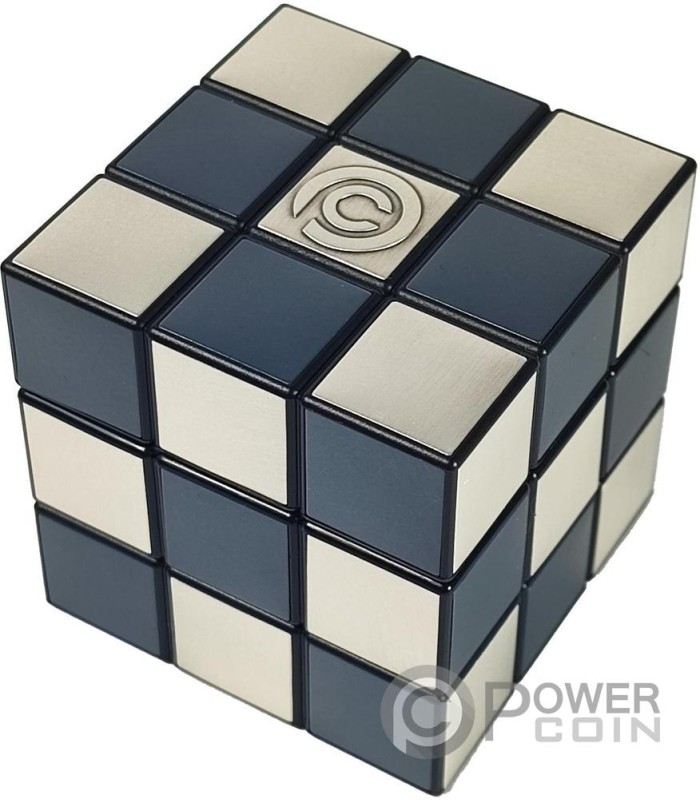
This might be somebody's last straw, since I know how bad everyone hates PowerCoin. For the first time, they had the audacity to slap their P.C. logo on the top of the actual coin (Niue of course🙄), this crazy Rubik's cube thing:
It's like it just never ends, lol.
Parker Freeze (@freeze_coins)
• Referee for coins from Burkina Faso
This might be somebody's last straw, since I know how bad everyone hates PowerCoin. For the first time, they had the audacity to slap their P.C. logo on the top of the actual coin (Niue of course🙄), this crazy Rubik's cube thing:
This might be somebody's last straw, since I know how bad everyone hates PowerCoin. For the first time, they had the audacity to slap their P.C. logo on the top of the actual coin (Niue of course🙄), this crazy Rubik's cube thing:
So now the new question can be asked: Should all of Nuie's coins be moved from category “Non-circulating coins” to “Collector coins” category?
To be fair, I'll repeat the definition of each here:
Non-circulating coins: Coins issued by a government with collection or investment purpose, including non-circulating legal tender coins (NCLT). They were not intended for circulation. The coins are denominated in a currency which has some circulating coins or banknotes.
Collector coins: Coins issued by a government for collection or investment purpose. They were not intended for circulation. The coins are denominated in a currency which doesn’t have circulating coins or banknotes.
I'll refrain from offering the choice of category Fantasy coins (Items that are similar to coins but they are either (sic) not issued by an official body. Coins issued by a non-official body with only collection or investment purpose.)
I suspected that very few coins would fall in the category “collector coin” and indeed there are only 206 results for a handful of issuing authorities. In addition, I think the coins from Panama don't belong to this category but rather to NC coins since the Balboa exists as a circulating currency. So there are even less coins falling in the "collector coins" category. (I have just sent requests to change the issuing authority for some coins from unknown to Republic (1903-date.)
Collector coins have no monetary value whatsoever - meaning no bank will ever exchange them for “face value”.
I agree, but in many or even most countries, banks are not required to take any NCLT at all. That includes Niue as I've shown above. This issue came up in Canada several times in the past couple of decades. The Mint encourages the banks to accept NCLT and return it to the Mint for face value. This means a waste of time and money for the banks.
If I remember correctly, in the UK there is ONE situation where someone is required to receive NCLT, and it's when they won the payment of a debt in a court of law. Unfortunately I don't remember where I read this. Can anyone on Numista familiar with UK laws confirm this?
I'm a little fuzzy on the legalities of this but if the Niue coins are coins of the currency of Dollar of New Zealand doesn't that mean New Zealand has to somehow approve that? Or, am I just not understanding? Can I create coins and just declare they are denominated in New Zealand Dollars and magically they are?
I'm a little fuzzy on the legalities of this but if the Niue coins are coins of the currency of Dollar of New Zealand doesn't that mean New Zealand has to somehow approve that? Or, am I just not understanding? Can I create coins and just declare they are denominated in New Zealand Dollars and magically they are?
Yes. This came to my mind from when I saw your OP.
If I'm not mistaken, the NZ currency law was emended to address this. I'll have a look…
Note that none of the Niue coins corresponds in size and weight to the NZ circulation issues. There are some coins using face values that are actually circulating, but I don't think any has the same specifications (composition, diameter, …) as the NZ circulation issues.
I think the part of the Numista definition for Non-circulating coins “The coins are denominated in a currency which has some circulating coins or banknotes.” must mean circulating coins/banknotes produce by the same country producing the NCCs, not some other country using the same currency.
NCLT includes collector coins . People like myself do not collect them except perhaps a single piece from a country which does not have any circulation coins.
I must add we can not simply move any coin authorised by a soverign government to exonomia but treat it as NCLT.
Yes there are irritants as westminister mints many coins for Guernsey and Jersey which are not meant for circulation (infact individual Jersey and Guernsey circulation coins are not minted any more). In case of Isle of Man- IoM there is a loophole as the House of Keys does authorise most of these fancy coins and it appears a minute amount eg 0.05% is put in circulation though none in IoM have seen them in circlation though a resourceful dealer there gets them from the banks which have them. Its a issue for me as I have to collect these coins as they are technically circulating commemoratives of Isle of Man
Well if you are irritated by Niue , I am irritated by UK and Australia and several other major countries which produce tons of these fancy NCLT coins… I stopped collecting NCLTs from UK since 2021. Royal Mint has simply gone overboard with these cartoon coins and do not bother to circulate them.
Regarding NCLTs - I must also state that some NCLTs like Republic of Somalia/ Somali Republic issues (animal coins) are exonomia. WHile The private German mint warned a Spanish blogger for calling them as such and sent a letter from the Somali Government, they stopped replying after I asked the mint why the Official name of Somalia is incorrect as it is Jamhuuriyadda Federaalka Soomaaliya or Somali Fdederal Republic and who has signed the document as name and designation were missing. Since then I have got no reply , despite warning the mint.
Also Burkina FAso coins are all exonomia , I saw some coins attributed to Democataric Federal Requblic of Burkina Faso and so on but these are obvious fakes as Burkina FAso itself means Burkina Republic and I have shown the coins to Burkina Finance Ministry who have denied any knowledge.
The India GOvernment Mint is also on a NCLT minting spree bankrupting collectors and has stopped circulating commemoratives . They also release Souveinir coins which are toekns without denomination
Good points. I think there are two major differences between countries like the UK or Australia and countries like Niue.
1. Countries like Niue have never made coins used by their populace to actually buy anything.
2. Countries like Niue have no say or control over what coins are made in their name, in the size, weight, composition or design. They just sit back, let other private companies control everything and collect their fees.
Tuvalu uses Aussie currency but It actually has its own coins in circulation though impossible to find. A vblogger searched the entire country and finally found a Tuvalu dollar coin in a bank.
I showed a Nauru government representative at Dubai expo some Nauru coins but he had no clue ( An UK lady tourist was taking up most of his time anyway making everyone else wait and I had to barge in and ask the guy the query)
It would be interesting to see how many of the Pacific dependencies & micro-states actually use their own coins ( with exception of PNG, Fiji, Samoa, Vanuatu, Tonga, Fr Polynesia and New Caledonia )
Not circulating. I'm sure they were sold well above face value. Also, they're bigger than the NZ circulating coins of the same face values.
Tuvalu uses Aussie currency but It actually has its own coins in circulation though impossible to find. A vblogger searched the entire country and finally found a Tuvalu dollar coin in a bank.
I showed a Nauru government representative at Dubai expo some Nauru coins but he had no clue
According to the catalogue, Nauru has no coinage of its own. So, not many people beside collectors would recognize those Nauru coins.
It would be interesting to see how many of the Pacific dependencies & micro-states actually use their own coins (with exception of PNG, Fiji, Samoa, Vanuatu, Tonga, Fr Polynesia and New Caledonia )
If one uses the right search filters in the catalogue, and assuming that all of the circulating coins of those small places have been entered in the catalogue (which is likely), then it's possible to find out. That's what I've just done with Tuvalu and Nauru… and I think the Niue case is now closed.
EDIT — Look at this more complete search for Tuvalu. I included every category of circulating items. It makes no difference (same 14 results as before) but some micro-states have their own paper money. Some states even have paper money and no coins (in Africa for example; I don't know about Micronesia).
The new organization of the catalogue, as you can see, makes a comprehensive search much easier. But perhaps not many collectors care about that as much as I do…
What a load of elitist pap! Judgemental and hateful people with zero understanding of Niuean people or culture.
Yes their coins are wallpaper and bubblegum, but don't insult the Island, it has 1300 people and 7000 living in New Zealand.
It CHOSE to remain a colony of New Zealand, we have been trying to give them independence for years - yet they choose to stay with us, whilst the woke empire (UN) calls us racist and colonial and every other name under the sun.
New Zealand has ZERO control over their coin issues, unfortunately some jumped up chiefs have sold their souls to dodgy American and European private mints and the coins that come out are laughable.
Actual Niueans never see or issue these coins. Niueans use New Zealand currency and notes. Most Niueans have no interest in this rubbish, yet they get the full whack of blame for it.
Australia issues mountains of crap in precious metals and base metals, at least 100 dollar coins showing things like bananas, infantile kids shows, sports teams, symbols and everything else, yet no one is baying for their blood. What about a silver coin with an opal in a plastic insert. What about royal mint with their musician series with coloured coins showing David Bowie's Ziggy Flash, or Elton John's glasses or the 7kg James Bond gold coin - no outrage there. But if a Pacific flyspeck Island gets entrepenurial and issues some low grade rubbish that appeals to mostly American and European collectors with more money than brains, we get the this holy crusade of indignation. The Canadian elephant coins and all the wallpaper rubbish from Francophone African Republiques, you only see or hear on the news when they have another oup or revolution and some guy in military fatigues and wrap around sunglasses and muttering some gibberish about the revolution populaire.
Somalia has issued some rubbish just as bad.
Shame! Shame! Niue, our monocles are falling off our heads.
No one gets upset with Palau or Micronesia (Hint, they are American satellites and no one wants to anger Mama America), but go wild and pick on Niue as it does not have a crazy dictator or world power.
I love coins. Especially silver, gold and anything really old.
Member of the Royal Numismatic Society of New Zealand and the Auckland Numismatic Society
They are absolute rubbish. No serious coin collector would have anything to do with them. But they do sell them and people must buy them. I googled Niue Coins and got this ….
Niue coins are considered “NIFC” (Not Intended for Circulation) coins, produced by governments for sale exclusively to collectors and/or investors. Globally, coin collecting demand is strong, and some island nations, like Niue, depend on this niche collector's market for a significant amount of their national income.
Mike
And Australian Rugby dollars, Bluey etc are all the highest quality and most astute coins. Perth Mint is complete investors pap. They do not mint any actual circulating coins unless you count the bubblegum coins.
Oh I forgot Australia is a rich white country, so they can do what they want - not like poor brown Niue.
I love coins. Especially silver, gold and anything really old.
Member of the Royal Numismatic Society of New Zealand and the Auckland Numismatic Society
This might be somebody's last straw, since I know how bad everyone hates PowerCoin. For the first time, they had the audacity to slap their P.C. logo on the top of the actual coin (Niue of course🙄), this crazy Rubik's cube thing:
It's like it just never ends, lol.
Didn't take long to go from Power Coin to Numista.